Search
Choosing the Right Chew - Matching Chews to Your Dog's Chewing Style

Choosing the Right Chew: Matching Chews to Your Dog’s Chewing Style

Share:

Choosing the right chew means matching it to your dog’s chewing style. When the match is right, chew time feels satisfying and tends to stay safer.

Why chew choice matters

Chewing can support daily mouth care, but the wrong chew can cause trouble. By three years of age, up to 85% of dogs show signs of dental disease. Most dog owners with fractured teeth don’t even notice a break.

Start with your dog’s chewing style

Watch one chew session, and you’ll learn a lot.

Gentle nibblers

Gentle chewers lick, mouth, and soften a chew. Choose softer, edible chews that bend a little. Pick pieces your dog can hold between their paws.

Moderate chewers

Moderate chewers work steadily, then pause. Choose medium-firm chews with texture to keep chewing interesting. Rotate chew types every few days to keep interest high.

Power chewers

Power chewers clamp down and try to crush. Pick larger chews made for heavy chewing. Skip very hard items, since hard toys, chews, and bones may cause dental fractures and chips.

Match chew size to body size

Size affects comfort, control, and the risk of choking.

Small dogs

Choose chews that fit fully between the front paws. Avoid thick chews that force a wide jaw opening. Replace a chew once it becomes a small, swallowable nub.

Medium dogs

Choose chews that take time, but still soften with saliva. If your dog gulps, go to a larger size or choose a slower chew. Offer chew time after a walk, when energy is lower.

Large dogs

Choose longer chews that your dog can’t swallow whole. If you can’t dent a chew with a fingernail, it may be too hard. Chewing very hard objects is a common cause of fractured teeth.

Age and life stage tweaks

Puppies need softer chews during teething. Adults can handle a wider range of textures and shapes. Seniors often do best with gentler chews that don’t stress worn teeth.

Quick safety checklist before you hand it over

Stay nearby during chew time, especially with a new chew. Pick a chew longer than your dog’s muzzle length. Take it away if it splinters, cracks, or sheds sharp pieces. If gagging, coughing, or repeated vomiting starts, stop chew time and call your veterinary clinic. Offer fresh water nearby. Store chews out of reach after, so your dog doesn’t guard them.

Chew-time options from Rollover

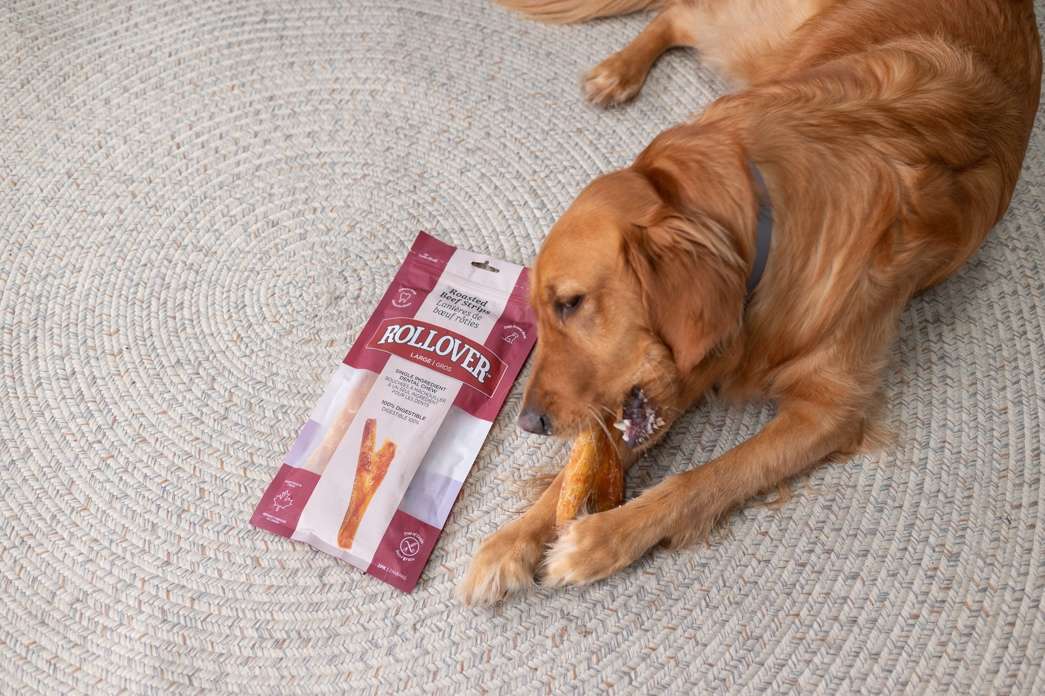
Rollover offers chew and treat choices you can match to your dog’s style. For softer, satisfying options, start with Edible Chews.

For dogs that prefer firmer textures, browse Bones & Hooves and keep sessions supervised.

For quick rewards between chewing breaks, check Dog Treats, including Party Stix.

If you prefer treat-style chews, try Dog Gone Gourmet Treats or Mini Training Bites.

Pair chew sessions with meals like Premium Dog Food, Functional Dog Food, or Wheat-Free Dog Food.

Featured Products

Related Articles

Homemade vs. Store-Bought Treats - Pros and Cons
Rollover Pet Food

Homemade vs. Store-Bought Treats: Pros and Cons

Compare homemade vs. store-bought dog treats and find what fits your routine. Learn the pros, portion tips, safety insights, and how to keep treats balanced, convenient, and healthy for your dog.

We use cookies to give you the best experience on our website by analyzing anonymized traffic.

Read more about how we use cookies in our Privacy Policy.

Get free shipping on orders over $100 (after coupon use and before tax), except remote locations.